

The normal follicle size for conceiving is generally around 18–24 mm when the follicle is mature and ready for ovulation. However, the ideal size can vary depending on the woman’s age, menstrual cycle, fertility treatment, and individual response.
This guide explores the ideal follicle measurements, growth rates, and how specialized care at IVF centers like Aastha Fertility Care can help you achieve your dream of parenthood.
Staring at the calendar, tracking every symptom, and waiting for that second line to appear on the pregnancy test kit can be an emotional rollercoaster for you.
And, you might find yourself searching for answers, wondering why things are not happening as quickly as you expected. However, in this process, the most important factor that often goes unnoticed is egg follicle size for conceiving.
According to research published by the National Library of Medicine, optimizing egg follicle size is crucial for women with diminished ovarian reserve (DOR) to improve success rates in fertility treatments.
To bring more clarity, Aastha Fertility Care specialist, Dr. Namita Kotia (MBBS, MS – Obstetrics & Gynaecology), states that the size and health of follicles are important signs of ovulation and fertility. When follicles develop properly, they release a mature egg, which is necessary for conceiving.
If you are searching for answers to how much egg size required for pregnancy, how egg size affects fertilization, natural ovulation & fertility treatments, then this blog is a detailed guide that has all the necessary information that you need to know.
What is Egg Follicle Size?
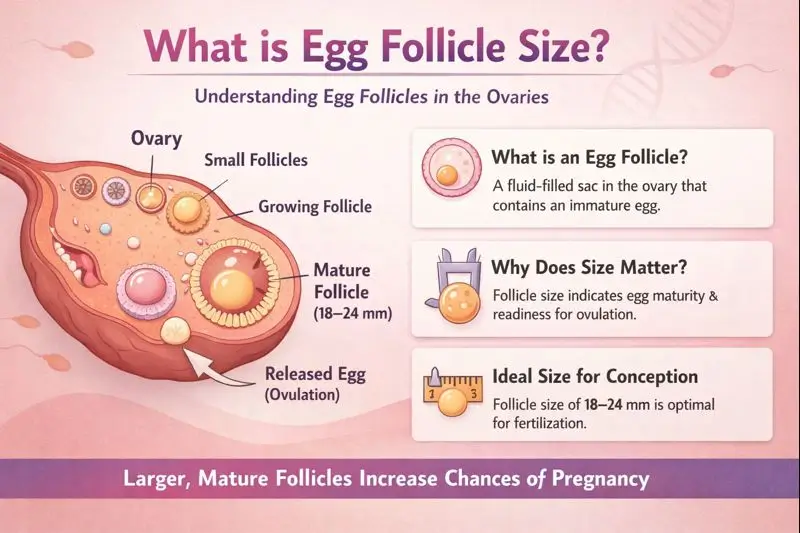
Think of a follicle as a tiny, fluid-filled sac inside the ovaries that holds an egg. Each follicle contains one immature egg. During a monthly cycle, several follicles start growing, but usually only one becomes the dominant follicle.
The egg follicle size typically refers to the size of the sac holding eggs before ovulation. If the follicle is very small, the egg may not be fully mature. If it becomes too large, the egg may be over-mature, which can reduce the chances of pregnancy.
What is the Ideal Egg Follicle Size for Conceiving?
The ideal egg follicle size for pregnancy is between 18mm and 24mm. The ideal range for the egg follicle size suggests the maturity of the egg. If the size is smaller than the ideal range then the egg is not fully matured and if the size of the follicle is larger than the typical range then the eggs has become overmatured, forming into a cyst.
Life Changing Experiences with Aastha Fertility - From Doubt to Success
Let’s understand what different sizes mean:
- Less than 18mm: If the egg follicle size is less than 18 mm, it means it is still growing and the egg may not be mature enough for fertilization.
- 18mm to 24mm: This is the ideal size for pregnancy, as it shows the egg is mature and ready for ovulation and conception.
- Above 25mm: If the egg follicle size is above 22 mm then it may indicate a cyst or that ovulation has already occurred.
In fertility treatments like IUI or IVF, doctors aim for follicles in this ideal range to maximize the chances of successful fertilization. Even in natural conception, a follicle in this size range gives you the best chance of pregnancy.
Follicle Growth & Size Guide: Table
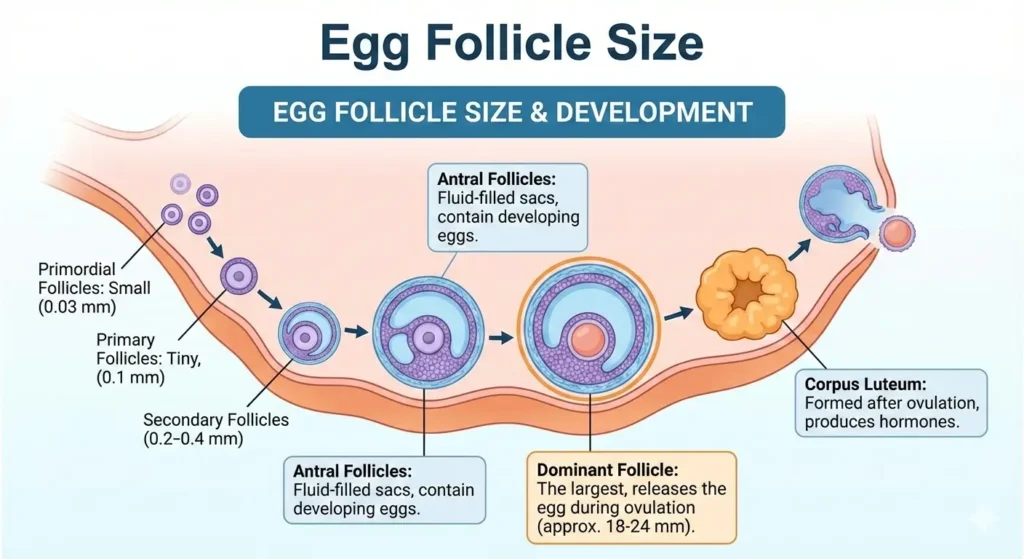
Monitoring how your follicle grows throughout your cycle can help you track ovulation more effectively. Let’s understand this with the given table:
| Phases of Cycle | Typical Follicle Size* | What it Means |
| Early Cycle (Days 1-5) | 2mm-5mm | Small and resting follicles |
| Mid-Cycle (Days 6-10) | 10mm-15 mm | A dominant follicle begins to emerge |
| Pre-Ovulation (Days 11-14) | 18mm- 24mm | Ideal egg follicle size for conceiving |
| Ovulation Cycle | Follicle Ruptures | The egg has released into the fallopian tube |
How Egg Size Affects Fertilization and Pregnancy
The size of your follicle directly impacts the quality of the egg. Let’s understand how egg size for fertilization plays a crucial role:
- Mature Eggs Lead to Better Fertilization
A mature egg released from an 18–24mm follicle is likely to be fertilized by sperm. If the egg is immature (from a smaller follicle), fertilization may not happen even if sperm is present.

- Healthy Implantation
Even after fertilization, a healthy embryo needs to implant successfully in the uterus. Eggs from well-developed follicles create stronger embryos, which increases the chances of implantation and a healthy pregnancy.
- Reduced Risk of Early Miscarriage
When eggs are smaller, they can have underdeveloped follicles that can create chromosomal issues. It can lead to failed implantation or early pregnancy loss. A mature follicle supports better egg quality.
- Lack of Essential Components
Follicles that are smaller than 18 mm usually contain immature eggs that lack the essential components for fertilization or for developing into a healthy pregnancy.
Natural Ovulation vs. Fertility Treatments
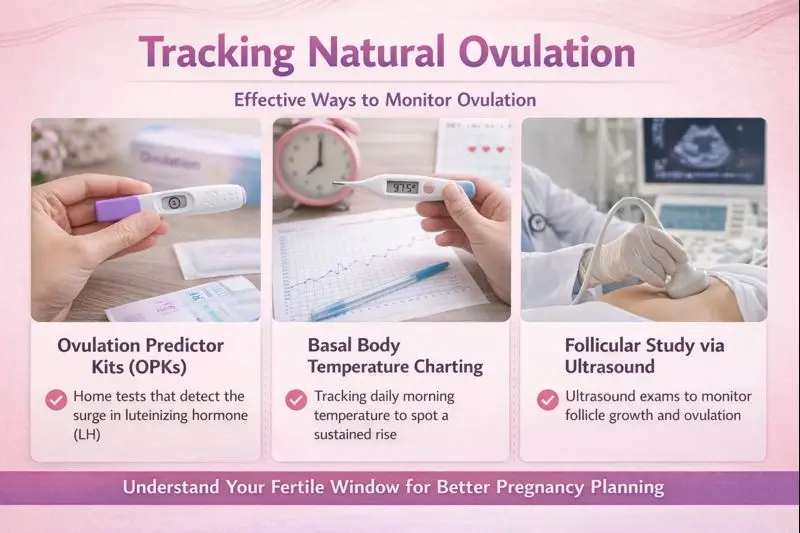
Whether you are trying to conceive naturally or exploring fertility treatments, the normal ovary egg follicle size for conceiving plays a major role in both journeys:
- Natural Ovulation
In a natural cycle, your body produces hormones that stimulate follicle growth, and ovulation happens when the dominant follicle reaches 18–24mm and releases the egg. You can track this through:
- Ovulation predictor kits (OPKs)
- Basal body temperature charting
- Follicular study via ultrasound
Understanding your follicle size helps you identify the most fertile days and improve your chances of natural conception.
- Fertility Treatments (IUI, IVF)
In treatments like IUI or IVF, fertility specialists use medicines to stimulate your ovaries to produce multiple mature follicles. Regular ultrasound monitoring tracks follicle size to:
- Understand the right time for insemination or egg retrieval.
- Adjust medical dosage for optimal growth.
- Make sure that eggs are mature before ovulation or collection.
Along with fertility treatments, we at Aastha IVF and Fertility Centre, Jaipur, offer advanced technology and personalized care and help resolve hurdles coming your way of parenthood journey.
What Is Follicular Study and How Does It Help?
A follicular study (also called follicle monitoring) is a series of ultrasound scans done to track the growth of your follicles.
Why It’s Done
- To make sure that the ovulation is happening.
- To set the intercourse time or insemination properly.
- To detect the response to fertility medications.
- To identify the ovulation disorders.
How It Works
Your doctor will perform transvaginal ultrasounds starting around day 8–10 of your cycle. These scans measure the size of your dominant follicle and track its growth.
Who Needs It
The follicular studies are mostly helpful if you:
- Are going through IUI or IVF treatment.
- Experience irregular periods (menstrual cycle).
- Are trying to conceive for more than 6 –12 months.
- Find out about ovulation issues.
This simple, painless procedure gives you clear answers and helps your doctor guide your fertility journey with precision.
What Is the Difference Between Egg Size and Follicle Size?
The egg size is the diameter of the egg cell, whereas follicle size is the size of the fluid-filled sac in the ovary, which contains the egg. Typically, during the fertility scans, the follicle is measured, not the egg. The follicle size in a mature egg during the ovulation period is around 18-24mm.
Factors Influencing Growth
Certain factors can affect how well your follicles grow in each cycle, and understanding these can help you take steps to support your fertility.
1. Hormonal Imbalances
Hormonal imbalances like PCOS or thyroid problems can disrupt your follicles’ development.
2. Age
Once your age crosses 35, your egg count and quality start to drop naturally. In such case, follicles may not grow as well, and your ovulation can get unpredictable.
3. Stress and Lifestyle
Life is busy these days. Constant stress, eating junk, barely sleeping, or sedentary lifestyle can disrupt your hormones and slow down your follicle growth.
4. Weight
Being underweight or overweight affects your hormone balance, which means less follicle growth and irregular ovulation.
5. Underlying Medical Conditions
Certain health conditions, like endometriosis, ovarian cysts, or other reproductive issues, can disrupt your follicle growth and lower your egg quality.
Understanding the ideal egg follicle size for conceiving is an important part of planning a successful pregnancy. Ovarian follicles are responsible for egg development, and their growth directly affects ovulation. If follicles do not reach the optimal size, fertilization may become difficult. Typically a mature follicle of size 18mm to 24 mm is considered good, increasing the chances of ovulation and fertilization.
Tracking follicle growth helps identify the most fertile window. With timely monitoring and expert care, the chances of conception can improve significantly.
Follicular Monitoring and Fertility Consultation in Jaipur
Understanding the ideal egg follicle size for conceiving is an important part of planning a successful pregnancy. Ovarian follicles are responsible for egg development, and their growth directly affects ovulation. If follicles do not reach the optimal size, fertilization may become difficult. Typically a mature follicle of size 18mm to 24 mm is considered good, increasing the chances of ovulation and fertilization.
Tracking follicle growth helps identify the most fertile window. With timely monitoring and expert care, the chances of conception can improve significantly.
Follicular monitoring is helpful to evaluate the growth and development of the follicle formed in the ovary during the menstrual cycle. In case you are going through follicular monitoring for ovulation, or during infertility treatment, the fertility specialist can evaluate your ultrasound reports, menstrual details, and other relevant findings to guide you and your partner on what to do next.
A fertility specialist at Aastha Fertility Care, Jaipur, will advise on what to do or what not to do during the follicular study and explain the relevant tests and treatment options for your infertility condition.
Conclusion
Understanding normal egg follicle size for conceiving gives you clarity about your pregnancy journey. Whether you are trying to conceive naturally or exploring fertility treatments, ideal egg follicle size plays a crucial role is making your pregnancy healthy and safe.
According to senior IVF and fertility specialist Dr. Namita Kotia, the follicle size is not just a number; it’s a sign of how much your body is prepared for pregnancy.
Not only egg follicles, but many other reasons can be a hurdle in your pregnancy journey. To deal with the complications, you need a team of fertility experts who can understand all your concerns and whom you can have full faith in. And now your search ends here, because at Aastha Fertility Care, Jaipur, we have a team of compassionate fertility experts who are always there to support you in your parenthood journey with advanced monitoring, personalized treatment plans, and proper focus on your emotional well-being.
To book your consultation, you can contact us at +91 9829 069 228
FAQ
How much egg size is required for pregnancy?
For the best chances of pregnancy, the follicle should be between 18mm and 24mm. This size indicates the egg inside is mature enough for fertilization.
Which egg size is best for pregnancy?
A size of 18mm to 24mm is often considered the best size for pregnancy, as it offers the highest quality for the egg to meet the sperm.
How much does egg size increase per day?
Once a follicle becomes dominant, it typically grows at a rate of 1mm to 2mm per day until it reaches maturity and ruptures.
Why is my egg size not increasing?
This could be due to hormonal imbalances (like PCOS), high stress, poor blood flow to the ovaries, or diminished ovarian reserve. A specialist can help identify the exact cause.
Can I conceive with smaller follicles?
While it is possible to conceive with follicles around 16mm-17mm, the chances are lower because the egg may not be fully mature. It is always better to aim for the 18mm+ range for better outcomes. Rest you can also take expert advice.



Leave a comment