
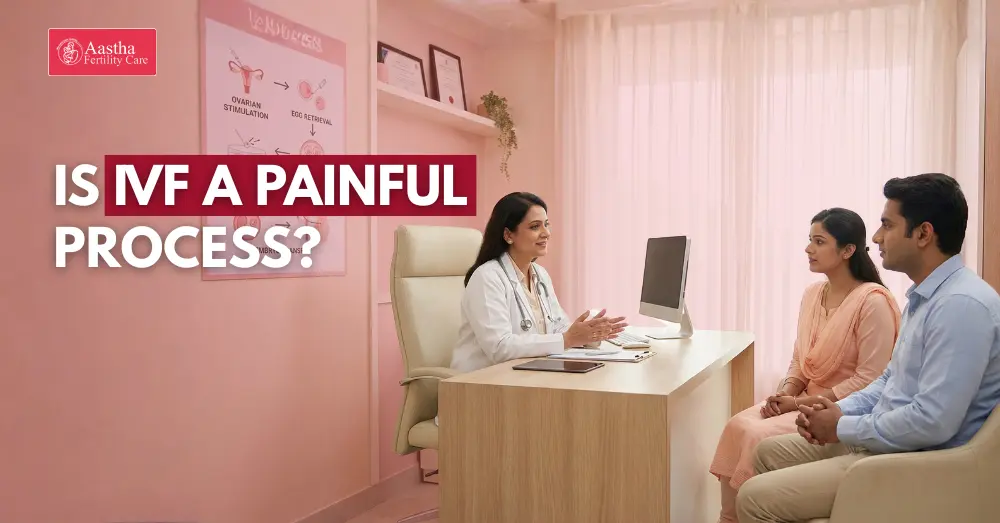
IVF (In Vitro Fertilization) is a fertility treatment where eggs are collected from the ovaries, fertilized with sperm in a laboratory, and the resulting embryo is transferred into the uterus to achieve pregnancy. The common question about IVF arises: Is IVF painful? IVF injections may cause a sting, ovarian stimulation can lead to bloating or heaviness similar to pre-period symptoms, but egg retrieval is usually painless due to anaesthesia. Women can face mild cramps afterwards, and embryo transfer typically causes minimal discomfort.
Is IVF painful? You might have had the same kind of thoughts before opting for IVF. Maybe someone told you it’s unbearable. Maybe you heard a completely different story from another woman who has already experienced it. And now you are stuck wanting answers that actually make sense, not vague reassurances.
According to Dr. Namita Kotia (MBBS, MS – Obstetrics & Gynaecology), IVF Specialist and Director of Aastha Fertility Care, Jaipur, most women find IVF manageable once they understand what each stage actually involves. She also adds that the fear of pain is often greater than the pain itself.
While the physical sensations are generally mild, the emotional aspect, such as anxiety, hormonal mood changes, and the waiting period for results, can be more challenging. With proper medical supervision, supportive care, hydration, and relaxation techniques, most women can go through the IVF process safely and comfortably.
So to answer all your queries related to IVF, we have explained everything in this blog, is IVF painful process, what each step involves, and what you can do to make the experience easier for yourself.
What is IVF?
IVF, In Vitro Fertilization, is a fertility treatment where eggs are retrieved from your ovaries and fertilized with sperm in a lab. The fertilized egg, now called an embryo, is then transferred back into your uterus with the hope of a successful pregnancy.
Is IVF a Painful Process? (Step-by-Step Pain Level)
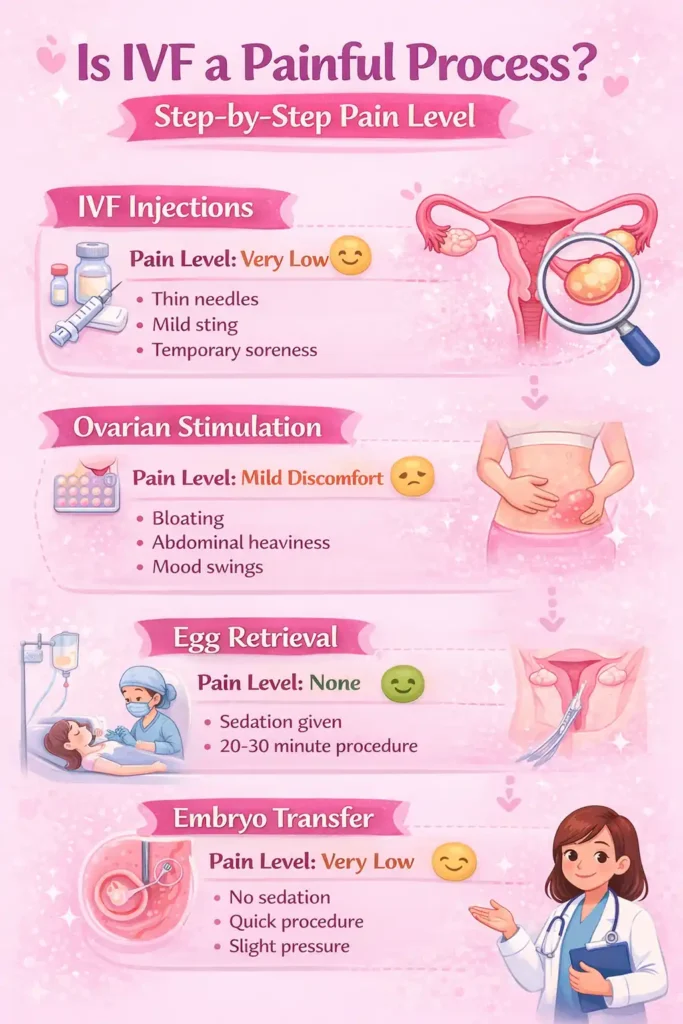
The pain in IVF is often just a series of small, manageable sensations. Let’s break down the IVF journey step by step so you know exactly how the journey feels physically and mentally.
- IVF Injections – Are They Painful?
To help your ovaries produce healthy eggs, you will need to take hormonal injections for about 10 to 14 days.
- Pain Level: Very Low
The needles are very thin; you may feel a mild stinging or pinching at the injection site. Also, your skin might build up soreness, which will get better after some time.
- Ovarian Stimulation Side Effects
Once the injections begin, your ovaries start producing multiple eggs instead of the usual one. This is called ovarian stimulation. As your follicles grow and your ovaries become larger than usual, you may start noticing physical changes.
Life Changing Experiences with Aastha Fertility - From Doubt to Success
- Pain Level: Mild Discomfort
You might feel a bit of bloating, heaviness in the lower abdomen, or mood swing, very similar to what you feel right before your period. It’s a sign that your body is responding well to the treatment.
- Egg Retrieval – Is It Painful?
In egg retrieval, you are given IV sedation (intravenous conscious sedation) or light general anaesthesia before the procedure begins, so you are completely relaxed and feel nothing during it. The doctor uses a thin needle guided by ultrasound to collect the eggs from your follicles. The entire procedure usually takes 20 to 30 minutes.
- Pain Level: None
You will not feel any extreme pain during the procedure, but after that, you might feel cramps, which will be managed with prescribed medicines.
- Embryo Transfer – Is It Painful?
This is the final step of the IVF cycle, and it does not require anaesthesia or sedation. A thin, flexible catheter is passed through the cervix into the uterus to place the embryo. After the embryo transfer, you will rest for a short period of time before heading home. Your doctor may advise light rest for the rest of the day.
- Pain Level: Very Low
No anaesthesia is needed, and it only takes a few minutes. You might feel a slight pressure from the speculum (a medical instrument used to gently open a body part, most commonly the vagina).

Where IVF Pain Is Usually Felt
During an IVF cycle, you will not feel any severe pain; you will probably experience discomfort in a few parts of your body:
- Lower abdomen and pelvic region: You might feel bloating from stimulation, pressure in the lower abdomen, and post-retrieval cramping.
- Injection sites: You might feel mild bruising and tenderness in the abdomen or thighs, wherever the injections are given.
- Lower back: You may experience pain in the lower back, especially during the stimulation phase when the ovaries are enlarged.
- Breasts: You might have a feeling of sensitivity and breast tenderness due to hormonal changes triggered by fertility medications.
Can IVF Cause Severe Pain?
In most cases, no. But sometimes, a condition called Ovarian Hyperstimulation Syndrome (OHSS) causes severe discomfort during IVF.
In a few cases, you will experience bloating, mild nausea, and abdominal discomfort. In rare cases, the ovaries swell significantly, and fluid can accumulate in the abdomen, causing pain and breathlessness.
But you do not have to worry because your fertility experts will monitor you carefully through regular ultrasounds and blood tests during the process. If any issues like OHSS are detected early, then your experts will adjust the treatment to keep you safe and comfortable.
Tips to Reduce IVF Pain and Discomfort
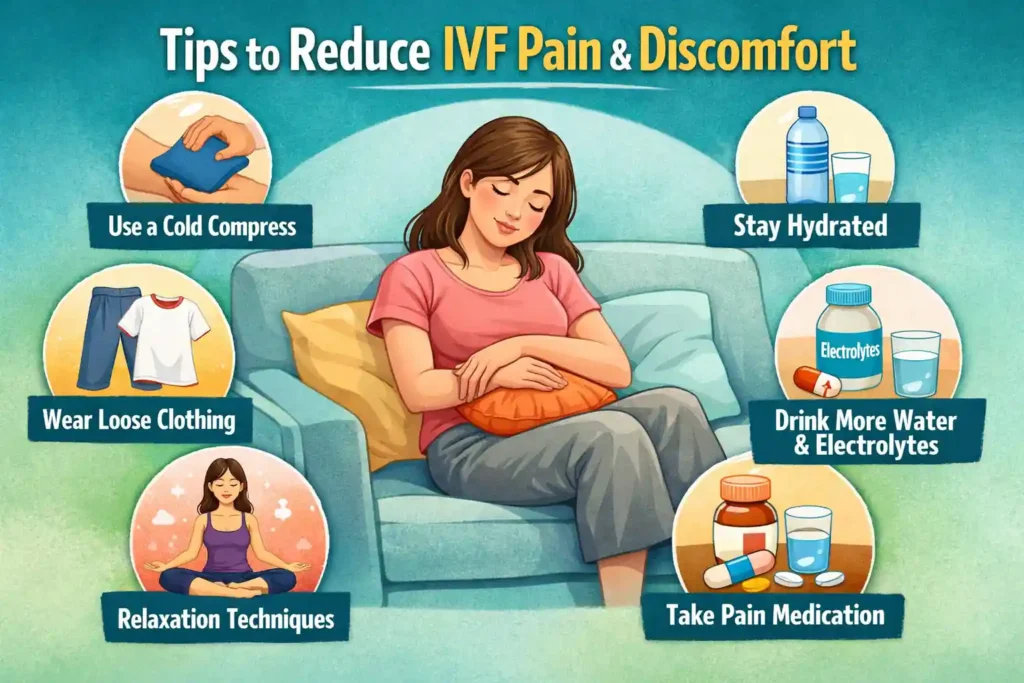
There are certain ways through which you can simply manage your pain and discomfort during your IVF treatment, like using ice on the injection site, wearing loose clothes, and relaxation techniques, etc.
Let’s understand them in detail:
- Use a Cold Compress: You can apply ice to the injection site for a few seconds before the shot to numb the area.
- Stay hydrated: Drinking plenty of water (and electrolyte-based drinks) can help reduce your bloating and support your body during stimulation.
- Wear loose, comfortable clothing: Wear loose cotton clothes to give your abdomen some breathing space during the stimulation phase.
- Use prescribed pain medication: Your doctor might prescribe you mild pain relief medicines like paracetamol. So, always stick to that.
- Relaxation Techniques: You should do deep breathing or meditation, which can help lower your stress levels and can actually make your body less sensitive to discomfort.
Emotional Pain During IVF
The emotional pain of IVF is often harder to carry than the physical discomfort. You have to wait for two weeks after embryo transfer. You feel anxiety before every ultrasound, mood swings from the medications, and many other things, which cannot be described in words.
The physical pinches are nothing compared to the emotional rollercoaster of waiting for a positive result. The anxiety of whether it will work or not can feel heavier than any needle.
So, if you are going through IVF, then take your emotional well-being just as seriously as your physical well-being. You should talk to your partner, close friends, or family members because the support, guidance, and empathy you receive throughout your journey matter just as much as the treatment itself.
When to Contact Your Doctor During IVF
While most IVF discomfort is normal, certain signs indicate that you should visit your doctor immediately, such as:
- Severe abdominal or pelvic pain that does not ease with rest or pain medication.
- Significant bloating where your abdomen looks visibly swollen and feels tight.
- Nausea or vomiting that is persistent or getting worse.
- Difficulty breathing or shortness of breath.
- Heavy vaginal bleeding (light spotting is normal; heavy bleeding is not).
- Reduced or no urination in a day can be a sign of OHSS.
Note: Your clinic’s contact number should always be saved in your phone during the treatment cycle. When in doubt, always call them, as it is always better to check than to wait.
Conclusion
So, is IVF painful for women? The honest answer is: it involves discomfort, but for the vast majority of women, it is manageable. The injections sting a little. The stimulation phase causes bloating. The egg retrieval has some post-procedure cramping. None of it is easy, but none of it is unbearable either.
If you are considering IVF and the fear of pain has been holding you back, please know that many women walk through this process every year and come out the other side holding their babies. The discomfort is real, but so is the outcome.
At Aastha Fertility Care, Jaipur, Dr Namita Kotia and her team make sure every patient is thoroughly informed, closely monitored, and genuinely cared for through every step of the IVF process.
FAQs: Is IVF Painful Process?
Is IVF more painful than normal periods?
Most women say IVF discomfort during the stimulation phase is similar to or slightly more than period pain, which involves mainly bloating and cramping. Egg retrieval is done under sedation, so you feel nothing during it.
Is IVF painful for the first time?
First-time IVF patients often find the experience less painful than they expected. The injections are thin and quick, and your fertility specialist will walk you through every step so nothing takes you by surprise. The discomfort is real but manageable for most women.
Is IVF injection very painful?
IVF injections are subcutaneous; they go just under the skin using very fine, thin needles. Most women describe the sensation as a small sting or pinch. The soreness at injection sites builds up over the stimulation phase, but it is generally mild and well-tolerated.
Is IVF safe for women?
Yes, IVF is considered safe when performed by experienced specialists following established protocols. Women might feel some mild side effects and serious complications like OHSS.
How long does IVF pain last?
IVF discomfort is temporary at each stage. Injection site soreness resolves once the stimulation phase ends. Post-retrieval cramping usually fades within 1 to 2 days. Embryo transfer discomfort, if any, lasts only a few hours. Most women feel back to normal within a week of the egg retrieval.




Leave a comment