

You must have panicked when your doctor asked you to get your AMH test done, as this is an important factor for conceiving. And many women like you ask What is a good AMH level to get pregnant? AMH, or Anti-Mullerian Hormone, is more than just a number; it actually tells you about your fertility health and ovarian reserve.
According to Dr Namita Kotia, fertility expert at Aastha Fertility Care (MBBS, MS – Obstetrics & Gynaecology), a simple AMH test can provide clarity about how many eggs you have in your ovaries. If you are feeling stressed or overwhelmed, please know this happens with many women. You are not alone. Do not worry, with the right guidance and support, your path to motherhood can be stress-free.
Every fertility journey comes with moments that leave you wondering, Is this normal? Why is this happening to me? So, let’s clear all your doubts in this blog about what is a good amh level to get pregnant? The significance of amh test normal range, amh levels by age and low amh treatment.
What AMH levels mean for fertility
Before understanding AMH levels, it is important to get a basic understanding of what AMH is. AMH or Anti-Mullerian Hormones are protein hormones, produced by the granulosa cells in a woman’s ovarian follicles.
Amh levels can be measured through a blood test to assess a woman’s ovarian reserve, or the number of eggs she has left. This provides a clear picture of your reproductive health and helps you plan your family with knowledge and confidence.
What is amh test normal range?
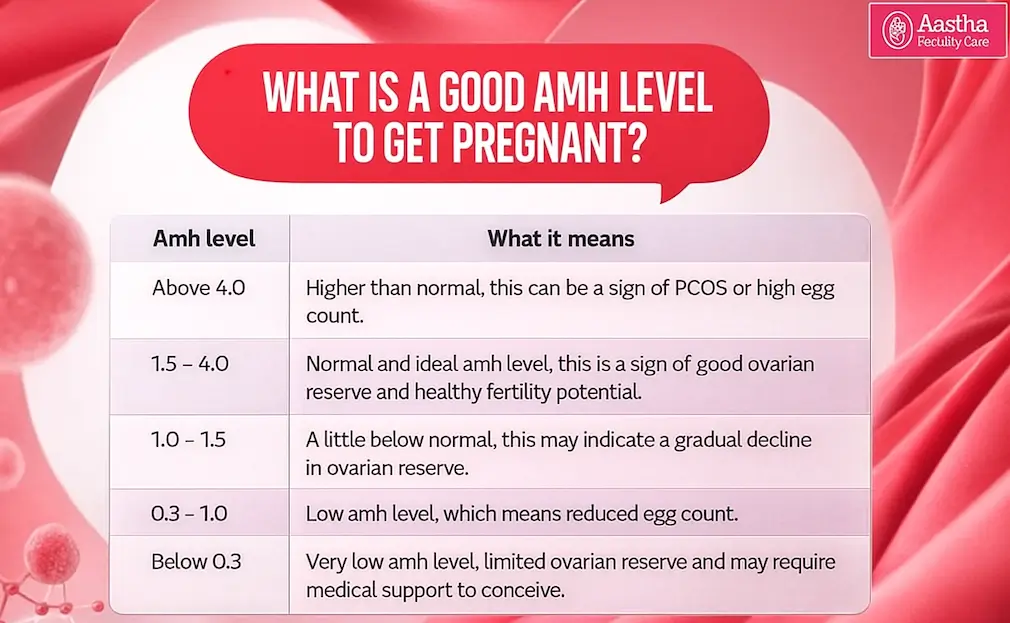
To understand your results clearly, it is important to know what a normal Amh range means before jumping to conclusions. The table given below will give you a brief understanding of amh test normal range.
| Amh level | What it means |
| Above 4.0 | Higher than normal, this can be a sign of PCOS or high egg count. |
| 1.5 – 4.0 | Normal and ideal amh level, this is a sign of good ovarian reserve and healthy fertility potential. |
| 1.0- 1.5 | A little below normal, this may indicate a gradual decline in ovarian reserve. |
| 0.3 – 1.0 | Low amh level, which means reduced egg count. |
| Below 0.3 | Very low amh level, limited ovarian reserve and may require medical support to conceive. |
What are amh levels by age?
Age plays a major role in determining amh levels, these levels decrease with age and mostly after the thirties. The approximate average of amh levels by age group are:
- 20-24 years: 3.0 – 5.0 ng/ml
- 25-29 years: 2.5- 4.5 ng/ml
- 30-34 years: 2.0- 4.0 ng/ml
- 35-39 years: 1.5-3.0 ng/ml
- 40-44 years: 0.5-1.5 ng/ml
- Over 45 years: 0.5-1.5 ng/ml
What are the symptoms of low amh?

In fertility cases, your body gives small signals that might go unnoticed. Just like that amh levels don’t always show obvious symptoms, yet they can silently affect your chances of getting pregnant. Common indicators such as irregular periods or difficulty in conceiving are few obvious symptoms of low amh.
Let’s look at different symptoms of low amh so that you can consult a doctor and take the required treatment accordingly.
Life Changing Experiences with Aastha Fertility - From Doubt to Success
- Irregular menstrual cycle.
- Heavy menstrual bleeding or unusually light periods.
- Difficulty in conceiving despite regular attempts.
- Starting menopause early with symptoms like a sudden feeling of heat or sweating.
- Feeling tired all the time for no clear reason.
- Mood swings and emotional instability.
What are the low AMH treatment options?
Low AMH levels can give tension, anxiety and fear of not being able to conceive. But in reality, low AMH level doesn’t mean pregnancy is impossible. With medical advancements and several treatment options, women with low AMH can help improve your fertility and increase your chances of conception.
Here are some low AMH treatment options that improve egg quality and boost fertility outcomes.
Fertility treatments
- Medications like Clomiphene Citrate (Clomid) and Letrozole helps with fertility and stimulate the ovaries. But make sure to take expert advice from fertility doctors before consuming any kind of medicine.
- Fertility injections like Gonadotropin encourage egg production during IVF cycles.
- Assisted Reproductive technologies, like In Vitro Fertilization (IVF) to fertilize eggs outside the body.
- Pre- implantation Genetic Testing (PGT) is another way to optimize egg and embryo quality.
- Ovarian Rejuvenation is a medical treatment that helps improve the quality of eggs.
Increasing AMH Levels Naturally
- Supplements like DHEA and coenzyme Q10 (under medical supervision) is a natural way to support reproductive health.
- Ensuring enough Vitamin D through sunlight is another natural way that helps with low AMH levels.
- Eating a balanced diet rich in antioxidants, omega-3 fatty acids, and leafy vegetables.
- Maintaining a healthy lifestyle via yoga, meditation and regular exercise. This positively influences AMH levels.
Read Also: How to Increase AMH Levels Naturally? Best Tips & Remedies! – Dr. Namita Kotia
Your AMH level does not define your fertility. It just gives you a clearer picture of what’s going on. Moreover, AMH levels in the normal range (1.5 – 4.0) usually point to a healthy ovarian reserve, but that’s not the whole picture. Factors like age, lifestyle, and overall reproductive health matter that influence your chances of conception.
If you are struggling to conceive, then Aastha Fertility Care is here to support and provide the right guidance on your journey to becoming a mother. Schedule a consultation with us, and our team will guide you with the right tests and treatments that fit your needs.

FAQs
What is AMH?
Anti-Mullerian Hormone (AMH) is a protein hormone produced by small follicles in a woman’s ovaries. It helps to assess your ovarian reserve.
What is a good AMH level to get pregnant?
A good Amh level typically ranges between 1.5 to 4.0 ng/ml. This indicates that you have a healthy ovarian reserve.
Can I get pregnant with low AMH?
Yes, even with a low AMH, you can get pregnant, but you need the right guidance and proper fertility treatment.
What causes low AMH levels?
You can experience low AMH levels due to age, genetics and other lifestyle factors such as smoking, stress or poor diet.
Can AMH levels be improved naturally?
Yes, consuming supplements advised by medical experts, maintaining a healthy weight, and eating a nutrient-rich diet can help improve your egg quality and overall fertility.
What does a low AMH level mean?
A low AMH level suggests a reduced number of eggs in your ovaries. This may make your conception process more challenging, but it doesn’t mean you can’t get pregnant.
What does a high AMH level mean?
A high AMH level, i.e. above 4.0 ng/ml, suggests a large number of eggs. This can be a sign of Polycystic Ovary Syndrome (PCOS).
How is AMH tested?
The AMH test can be done by a simple blood test. The results, fertility specialists understand your egg reserve and plan treatment if required.
What should I do if my AMH is low?
If your Amh level is low, you should consult a fertility specialist for correct guidance and medical support.





Leave a comment