
The HPV vaccine is a preventive vaccine that protects against Human Papillomavirus (HPV), the main cause of Cervical Cancer. Cervical cancer vaccine in India, like Gardasil 9, Gardasil 4, and Cervavac, are available, offering protection against different HPV strains. The ideal age for vaccination is 9 to 14 years, where only 2 doses are needed. However, women up to 45 years can also take it as a catch-up vaccination, which requires 3 doses. Boys can also receive the vaccine (especially Gardasil 9) to prevent HPV-related diseases. Overall, the HPV vaccine is a highly effective way to prevent cervical cancer and other HPV-related conditions, especially when taken at the recommended age along with regular health check-ups.
Every year, thousands of families across India get the news no one ever wants to hear: cervical cancer. What makes this so heartbreaking is the fact that this cancer is largely preventable. A single vaccine, given at the right age, can protect your daughter, your sister, or even yourself from one of the most common cancers in Indian women.
According to the National Library of Medicine cervical cancer is the second most common cancer among women, accounting for nearly 18.3% of all new cancer cases in females.
Aastha Fertility Care’s specialist, Dr Namita Kotia (MBBS, MS – Obstetrics & Gynaecology) states that so many women in India remain unvaccinated not because they don’t care, but because there’s so much confusion around the cervical cancer vaccine in India. What is it exactly? Is it safe? How much does it cost? Can adults take it too?
If these questions have been on your mind, you have come to the right place. This blog will walk you through everything clearly about cervical cancer vaccine in India without any medical jargon.
What Is the HPV Vaccine?
The HPV vaccine is a vaccine that protects you from the Human Papillomavirus, or HPV. HPV is a very common virus that spreads through skin-to-skin contact and is the primary cause of cervical cancer. The vaccine does not treat existing HPV infections. Instead, it works by training your immune system to fight off the virus before it can cause any harm.
The cervical cancer vaccine in India is recommended for girls and young women, and in some cases for boys and men as well, to prevent HPV-related cancers and genital warts.
Why Is the Cervical Cancer Vaccine in India Important?
For couples planning a family or young women looking forward to a healthy life, cervical health is vital. If left unchecked, HPV can lead to complications that affect your overall well-being and fertility. Taking the vaccine for cervical cancer in India is important and an act of self-care that ensures you remain healthy throughout your life.
How Does the Vaccine for Cervical Cancer in India Work?
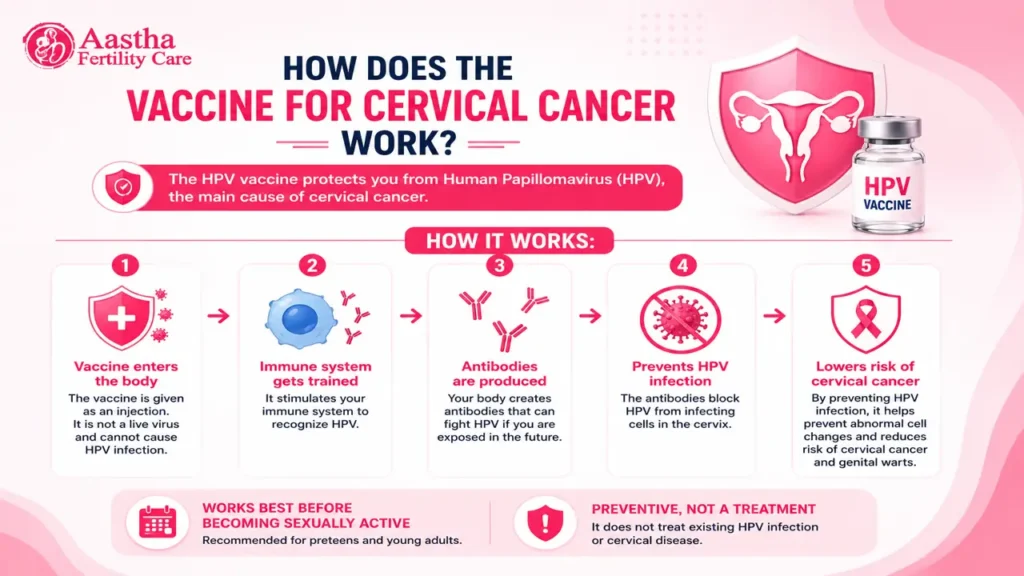
The vaccine works by introducing your immune system to specific proteins found on the surface of the HPV virus. Your body recognises these as foreign and builds antibodies against them. If you are later exposed to the actual HPV virus, your immune system already knows how to fight it quickly and effectively before it can cause any cellular damage that might lead to cancer.
The vaccine does not contain any live virus, which means it cannot give you an HPV infection. It is safe and well-tested, and the antibodies it generates can last for at least 10 years.
Life Changing Experiences with Aastha Fertility - From Doubt to Success
Types of HPV Vaccine in India
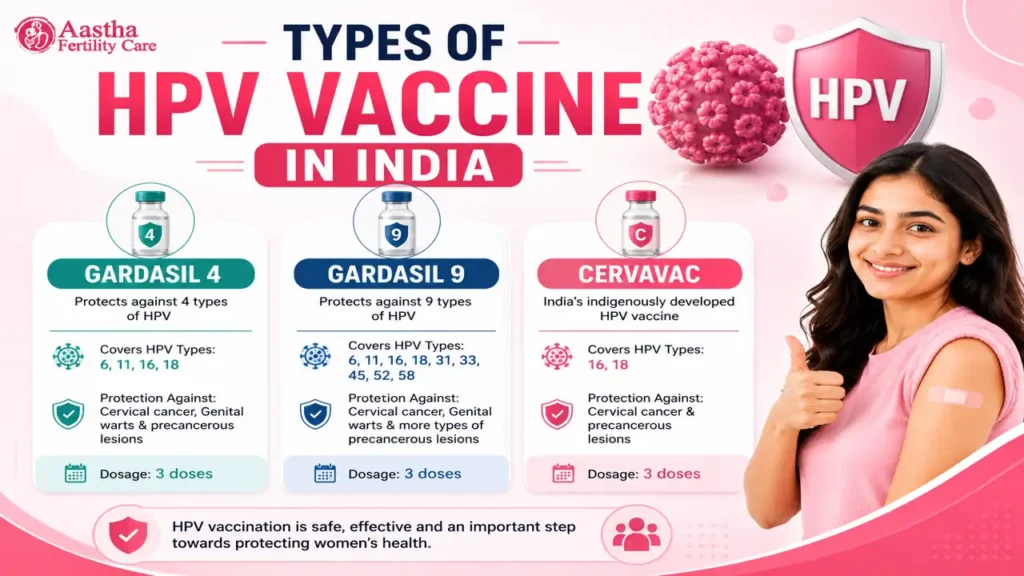
There are currently three HPV vaccines available in India. Each one offers protection against different strains of HPV.
Let’s understand each of them in detail:-
- Gardasil 4
Gardasil 4 is a quadrivalent vaccine, meaning it protects against four HPV types (6, 11, 16, and 18), covering both cancer-causing strains and those that cause genital warts. This vaccine is manufactured by Merck & Co., Inc. and has been available in India since 2008.
- Gardasil 9
Gardasil 9 is the upgraded version that protects against nine HPV types (6, 11, 16, 18, 31, 33, 45, 52, and 58). This makes it the most comprehensive protection available and is suitable for both females and males. It is also the most expensive option among the three.
- Cervavac (India’s Own HPV Vaccine)
Cervavac is developed by the Serum Institute of India. It is the first indigenous HPV vaccine in India that is specifically designed to be affordable and effective, making cervical cancer prevention accessible to every household.
Cervical Cancer Vaccine Cost in India
The cervical cancer vaccine cost in India varies depending on the brand:-
- Cervavac: Being locally produced, it is expected to be priced between ₹1500 to ₹2000 per dose, depending on the pharmacy or supplier.
- Gardasil: The price of the Gardasil vaccine varies based on the version, with Gardasil 9 costing approximately ₹10,000-₹11,000 per dose and the older Gardasil 4 costing about ₹3,000-₹4,000 per dose.
HPV Vaccine Age Limit in India
The ideal age to get vaccinated for girls is between 9 and 14 years, where only 2 doses are sufficient to get the strongest immune response. This is why the government’s vaccination programme focuses on this age group.
After the age of 14, it is called catch-up vaccination, which means girls and women between 15 and 45 years can still benefit significantly from the vaccine. At this age, 3 doses are required for complete protection. Moreover, Gardasil 9 is approved for males between 9 and 15 years to prevent genital warts and HPV-related cancers.
How Many Doses of HPV Vaccine Are Required?
The number of vaccine doses depends entirely on your age at the time of the first vaccination, if:
- The Age is between 9-14: Two doses are needed. The second dose is given 6 to 12 months after the first one.
- The age is between 15-45: Three doses are required. The standard schedule is 0, 1–2, and 6 months, meaning the second dose is given 1–2 months after the first, and the third dose is given 6 months after the first.
Note: Completing the full course is essential. Missing a dose can reduce the level of protection the vaccine provides, so it is important to follow through with the schedule your doctor recommends.
Possible Side Effects of HPV Vaccine
Like any standard injection, you might feel a little bit of soreness in the arm, a slight fever, or a mild headache. These are temporary signs that your body is building its defence system and usually fade within a day or two.
Where to Get the HPV Vaccine in India
You can find the vaccine for cervical cancer in India at:
- Government hospitals and health centres: Many health centres now offer the HPV vaccine, especially Cervavac, at subsidised or no cost for girls aged 9 to 14 under government programmes.
- Private hospitals and clinics: All three vaccines are available at private hospitals. The cost will be higher, but you will have more flexibility in choosing the brand and scheduling.
- Gynaecology and women’s health clinics: These are often the most suitable places to go if you have specific questions about your health history or fertility, as you get personalized guidance along with vaccination.
- School health programmes: Many states are now running school-based HPV vaccination campaigns. If your daughter is between 9 and 14, check with her school or your local health authority.
Myths About the Cervical Cancer Vaccine
There is a lot of misinformation around the HPV vaccine in India, and it has kept many families from getting potentially life-saving protection. Let’s break down each and every myth in detail:-
- Myth 1: The vaccine means my daughter will become sexually active early
This is simply not true. The HPV vaccine is a cancer prevention tool, just like the Hepatitis B vaccine or the polio vaccine. Vaccinating your daughter does not encourage any kind of behaviour; it protects her health.
- Myth 2: The vaccine is only for girls
Boys can also get vaccinated against HPV. Gardasil 9 is approved for males aged 9 to 15 and helps prevent genital warts and certain HPV-related cancers in men as well.
- Myth 3: Adults don’t need the vaccine
Women up to 45 years of age can benefit from the vaccine, especially if they have not previously been infected with HPV strains that the vaccine covers.
- Myth 4: The vaccine protects against all types of cervical cancer
The vaccine covers the most common high-risk HPV strains but does not replace the need for regular cervical cancer screening. Vaccination and screening together offer the strongest protection.
When Should You Consult a Doctor?
You should speak with a doctor about the HPV vaccine if:
- Your daughter is between 9 -14 and has not yet been vaccinated.
- You are a woman between 15 and 45 and have not received the vaccine.
- You are unsure which vaccine brand is right for you or your family.
- You have missed a dose and want to know how to resume.
- You have a health condition and need guidance on whether the vaccine is suitable.
- You are planning a pregnancy and want to understand your options for cervical cancer prevention.
Note: A gynaecologist can review your health history, explain the risks clearly, and guide you toward the best decision for your specific situation.
Conclusion
The HPV vaccine in India is one of the simplest and most powerful steps any family can take toward preventing cervical cancer. The cervical cancer vaccine in India is now more accessible than ever, thanks to the indigenous Cervavac vaccine and government vaccination programmes. Whether your daughter is 9 years old or you are in your thirties and considering a catch-up vaccination, you should definitely consult your doctor.
And still, if you have many questions regarding this, then you can visit Aastha IVF Centre, Jaipur, where Dr Namita Kotia and her compassionate team are there to guide you through every aspect of your reproductive and women’s health, including cervical cancer prevention.For booking your free consultation, call us at 9829069228.
FAQs
What is the cost of the cervical cancer vaccine in India?
The cervical cancer vaccine cost in India ranges from ₹1,500 to ₹10,000 per dose, depending on the brand. Cervavac (Made in India) is the most affordable at ₹1,500–₹2,000 per dose, while Gardasil 9 is the most expensive at ₹6,000–₹10,000 per dose. Government hospitals often offer free or subsidised vaccination for girls aged 9 to 14.
At what age should girls get the HPV vaccine in India?
The ideal age is 9 to 14 years. Girls in this age group need only 2 doses and develop the strongest immune response. The HPV vaccine age limit in India for catch-up vaccination extends up to 45 years for women, requiring 3 doses.
Is the HPV vaccine safe?
Yes. The HPV vaccine has been tested and used across millions of people for over 15 years globally. It is approved by the WHO and India’s DGCI. Side effects are mostly mild, such as slight soreness at the injection site or a low-grade fever, and go away quickly.
Can adults take the HPV vaccine in India?
Yes. Women up to 45 years of age can receive the HPV vaccine as a catch-up vaccination. At this age, 3 doses are needed for full protection.
Is the HPV vaccine available in government hospitals in India?
Yes. Government health centres and Ayushman Arogya Mandirs offer the vaccine, particularly Cervavac, often free or at subsidised rates for girls aged 9 to 14 under state and national health programmes. Availability may vary by state and district.
Can boys take the HPV vaccine in India?
Yes. Gardasil 9 is approved for boys between 9 and 15 years in India. It protects against genital warts and HPV-related cancers. Vaccinating boys also helps reduce the spread of HPV in the community.

Leave a comment